Donald Trump and the Spirit of Absalom
Far from being the “law ‘n order” candidate, Donald Trump has long been inciting sedition against the United States.
First published at DonClasenSeriousGuy.com, Oct. 25, 2020, and abridged.

Spirit of Absalom: Every now and then a fad phenomenon blows through the Church world, often recycled from earlier times since there’s nothing new under the sun (Eccl 1:9). Unfortunately, since Church-goers are so ill-taught and served by their leaders nowadays, they usually lack the discernment to know whether it’s a genuine “move of the Spirit” or just the latest mass delusion running its course.
When I came to the Lord in the mid-1970s, much of the Evangelical/Charismatic Church world was caught up in the midst of one of these winds of doctrine (Eph 4:14) known as “submission to authority.” In fact there was a whole suite of these fad teachings. One was “Chain of Command,” a phrase coined by Bill Gothard the creator of the wildly-popular Basic Youth Conflicts seminars. The idea to it, common throughout all these teachings, was that God’s way is not to rule over His people directly but indirectly through human authorities, which form a “chain of command,” military-style, upwards to heaven.
This worked fine for Church people who tended to look upon former hippies like myself as “rebels” who came out of a lifestyle of “do your own thing” and a stunning lack of discipline. That much was true enough, but discipline of any kind including spiritual discipline is the very human condition we all struggle with. But in the face of a generation of protestors who were easy targets, this made Church people feel better about themselves.
This worked for Gothard’s subject matter as well, simply because the Bible does tell children to “obey your parents” (Eph 6:1-3). When they grow up it’s modified to just, “Honor thy father and mother,” the Fifth Commandment (Ex 20:12). And since most of his students were technically still children (teenagers) it wasn’t too problematic. For a guy pushing 30 like myself it felt simultaneously quaint and intimidating as I sat listening up there in the bleachers.[1]
Beyond that, Gothard’s teaching was, as one Asbury seminary professor put it, “One of the purest forms of Calvinism” he’d ever heard of. (Not to mention that it’s also a hierarchical, Catholic philosophy of authority). The idea that God can consistently and infallibly communicate His will to the believer through human authorities assumes a lot of things. One, that He doesn’t want direct access to the believer, one of the great objectives of the New Covenant (II Cor 6:16; Heb 9:8). Another, that human authorities are infallible, or God is a control freak Who makes men behave the way He wants. Or that men cannot have hidden motives in all that they do.
It also conveys the image of a capricious Deity[2] whose perfect, secret will is constantly unfolding in the form of this dismal tale we call human history. I never could understand how Calvin’s perverse interpretation of existence could ever inspire faith and trust in the believer.

A Full Plate of Them
Spirit of Absalom: So everything then suddenly had to become something about submission— submission to government officials (unless they’re Democrats of course), bosses at work, parental authorities, husbands, and especially Church authorities.
There were similar concepts going around too such as “headship,” the idea that God’s will for the wife always comes through her husband.[3] There were various discipleship teachings including the usually benign group discipleship or “accountability groups” wherein men say, open their lives up and confess their most intimate sins. Then there were the more problematic personal discipleship models after Paul’s example with Timothy and a few others who travelled with him. The idea was that of a more mature person “pouring their lives into” that of another.[4]
The worst of them though were schemes of submission to Church leadership such as “Shepherding” propagated by the “Fort Lauderdale Five” and others.[5] This was so radical a form of discipleship or submission as to lead to charges of cultism and excessive control, even to the point of destroying marriages. It led to a huge stink in the Charismatic world and was covered in the Christian press with luminaries like Kathryn Kuhlman and Pat Robertson weighing in forcefully against the five who were basically spreading Catholic thinking.[6]

And Sloganeering. There’s Always Sloganeering
Spirit of Absalom: For me however, true to form, I was largely unaware of this storm going on in the Christian media since the Bible school I was going to at the time was a part of it with their one-on-one discipleship model. The tendency was to either keep us in the dark, spiritualize the whole thing away as gossip, or insinuate that such questions only proved what a rebel you are. It was like a modern form of witch dunking. If you survived the water, it proves you’re a witch. If you drowned, you were probably innocent.
There were a number of phrases and Bible stories that went along with this mentality. One of them was the horror of being “a Lone Ranger,” a guy I always took to be a real hero. But that’s the difference between then and now. Today people have a heart attack when they hear the word “collective,” as in “group effort,” which is why they’re always invoking the specter of “Saul Alinsky-type community organizing.”[7] Nowadays Libertarian “rugged individualists” are encouraged to kidnap “Demoncrat” governors they allege are “tyrants” for making them wear their masks. You can almost hear the voice of their mothers lecturing them about eating their vegetables. How the pendulum swings.

Another was the attitude of David while being hunted down by King Saul, nobly refusing to “lift up his hand” against “the Lord’s anointed.”[8] This was copiously applied to the idea of never questioning leadership, even though the original idea of the Church was that of a family model of little local communities of like-minded faith who would meet as brothers, sisters and friends for fellowship, worship, teaching and good deeds. No less than the Apostle Paul was careful not to “lord it over” others” (II Cor 1:24). Why then should the under-shepherds of Jesus who are sheep themselves?
Another was a famous verse that came out of King Saul’s failure to carry out the command of God through Samuel the prophet. It was, “Rebellion is as the sin of witchcraft, and stubbornness is as iniquity and idolatry” (I Sam 15:23a). To my untrained ears at the time, I assumed what it was saying is that rebellion is somehow a form of witchcraft. How, I couldn’t figure out. But in time I came to realize it means rebellion is as serious as witchcraft in the sight of God, since it refers to a willful challenge of God’s authority. After all, Samuel didn’t charge Saul with disobeying him, but the commandment of the Lord. “Because thou hast rejected the word of the Lord, he hath also rejected thee from being king,” is how the verse finishes.
Acknowledging Degrees of Wickedness
Spirit of Absalom: In time I came to realize how much their interpretation was trivializing the sin of rebellion, limiting it to a clash with human authorities. But in essence it’s an animosity directed at God Himself ultimately. On one level, rebellion is a universal tendency in the human race (Ro 5:10), but on another, few people go out of their way to defy God deliberately, though it’s something growing exponentially in the last days. As such it is a serious charge to make to someone, in spite of how casually people were using it back in the 70s, terrorizing new believers especially who were simply trying to understand God’s will for their lives.
It is a fault also linked to a stubbornness and willfulness that just won’t quit as Samuel formulated it. The irony of Saul’s transgression was that he had shown too much “Christian mercy” if you will, to the wrong person.[9] King Agag was a man God had “appointed unto utter destruction,” as the phrase puts it elsewhere (I Kings 20:42). He was the head of a nation so brutal that they are the only people in the Bible whose name God swore to “blot out from under heaven” (i.e., exterminate—Deut 25:19).
In a day in which Church people are so schizophrenic, referencing “gentle Jesus, meek and mild” one minute and condoning political sedition the next, we tend to forget that the One Who is the same “yesterday, today and forever” treats different people differently. Although we all once were “enemies of God” (Rom 5:10), some go on to become the 5% of society known as sociopaths.
David called them “the wicked of the earth” and often meditated on their ways in the Psalms. While a shallow Church world loves their stock formulations (“all have come short of the glory of God,” e.g.), God does grade sin by its seriousness. Jesus for instance was compassionate and patient with the common people Whom He likened to “sheep without a shepherd.” Yet with the religious leaders He could be very blunt, strident and provocative (Mt 23).
That phrase I mentioned, a man “appointed unto utter destruction” (I Kings 20:42) was not Agag whom Samuel “hewed in pieces before the Lord” after dealing with Saul (I Sam 15:33), but Benhadad of Syria. He too was spared by king Ahab of Israel who in a fit of misplaced compassion referred to him as “my brother.”[10] After a prophet told Ahab that therefore his life would go for that of Benhadad’s, Ahab went home and walked right into the incident with Naboth (I Kings 21) that eventually led to his God-ordained death (I Kings 22:34-38).[11]

The Rebel Type
Spirit of Absalom: Thus there are a number of classic rebels in the pages of Scripture. A list of just some of them would include,
–Nimrod (“let us rebel”) who built Babylon around the Tower of Babel, and the purported founder of the Babylonian mystery religions, the nemesis of Yahweh worship (Gen 10:8-10).
–Korah and the 250 “princes of renown” who led a populist revolt against a man who had gone through hell and back to become God’s chosen leader of the Exodus, falsely accusing him of “tyranny” (Num 16:3,13). This in spite of all the miracles God did through Moses to confirm him. Unfortunately one last one (vss 31-33), sealed the eternal fate of these “sinners against their own souls” (vs 38).
–The rest of the congregation who thereafter falsely accused Moses again of “killing the people of the Lord” (vs 41).
–Jezebel with her 85 prophets of Baal and the grove who was a constant enemy of Yahweh (I Kings 21:25; 19:1,2).
–Queen Athaliah, “that wicked woman” (II Chron 24:7), the mother of king Ahaziah who was his “counselor to do wickedly,” to “walk in the ways of the house of Ahab” (II Chron 22:3). After he died she rose up and murdered “all the seed royal” (i.e., her own grandchildren, vs. 10), that she might reign in their stead.
–King Manasseh who committed a laundry list of evil (II Kings 21:1-9) before he repented (II Chron 33:12), the most amazing turnaround in the Bible.
–Haman, a survivor of Agag’s line who wanted to kill all the Jews (Esther 3).
The Classic Case of Absalom
Spirit of Absalom: One of the most classic examples in the Bible however, is that of Absalom, a case often referenced in submission to authority teachings, and rightfully so. Absalom was one of David’s sons who according to the Law of Moses, actually became guilty of premeditated murder of his half brother Amnon who had raped his sister Tamar (II Sam 13). Yet David, feeling guilty over these sexual sins creeping into his family because of his own treachery with Bathsheba (II Sam 12:10), refused to do his kingly duty and bring his son to justice.
That was David’s first mistake. He may have added to it by being seemingly unable to fully forgive Absalom and restore him to favor, even though there’s no evidence it would have made a difference anyway. Although we don’t really know all that transpired between them, the account being simply too sparse at the end of II Samuel 14, we do know the basic bent of Absalom’s character though. And that was very obvious:

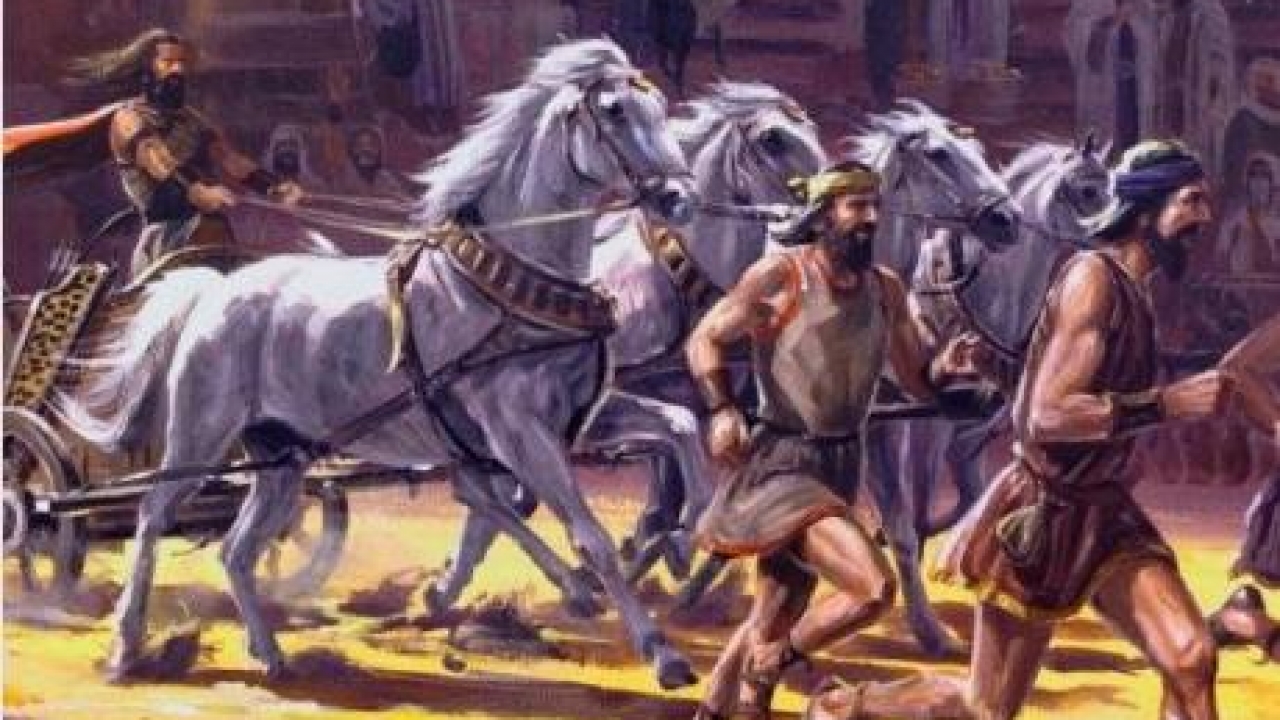
And it came to pass after this, that Absalom prepared him chariots and horses, and fifty men to run before him.
2 And Absalom rose up early, and stood beside the way of the gate: and it was so, that when any man that had a controversy came to the king for judgment, then Absalom called unto him, and said, Of what city art thou? And he said, Thy servant is of one of the tribes of Israel.
3 And Absalom said unto him, See, thy matters are good and right; but there is no man deputed of the king to hear thee.
4 Absalom said moreover, Oh that I were made judge in the land, that every man which hath any suit or cause might come unto me, and I would do him justice!
5 And it was so, that when any man came nigh to him to do him obeisance, he put forth his hand, and took him, and kissed him.
6 And on this manner did Absalom to all Israel that came to the king for judgment: so Absalom stole the hearts of the men of Israel. – (II Sam 15:1-6)

Absalom the Great
Spirit of Absalom: Absalom is the classic example of a rebel in the Bible, a “rebel without a cause” to be precise, because sometimes rebellion can have a legitimate purpose. Like the Reformers who tried diligently to find a way to stay within Roman Catholicism, or the Founding Fathers who sought to get redress of grievances, real “rebels with a cause” are brought to a matter reluctantly, because their bent is towards reconciliation and peace (Ro 12:18), not strife (Ja 3:14,16). They are also careful to guard their own deceitful hearts (Jer 17:9) against “overweening ambition” (Phil 2:3). Moses for instance had a zeal to liberate his people that God couldn’t use at first because it wasn’t His way or His timing. By the time Moses had spent another 40 years humiliated as a shepherd in the back of the beyond (Gen 46:34), he had a very different attitude (Ex 4:13),[12] closer to where God wanted him to be.
David too being a shepherd probably came across as an arrogant young upstart for wanting to take on Goliath. His own brother even accused him of as much (I Sam 17:28). And I’m sure Jesus Himself was accused of the same given all His charges that the Pharisees were not just adding to the Law of Moses, but burying the people in a blizzard of new obligations God never required, the true definition of legalism (Mt 23:4).
But all of Absalom’s problems began and ended with himself—his own self-regard, vanity and ambition:
“But in all Israel there was none to be so much praised as Absalom for his beauty: from the sole of his foot even to the crown of his head there was no blemish in him.” – II Sam 14:25
I mean, this guy even had great hair!:
“And when he polled his head [cut his hair], (for it was at every year’s end that he polled it: because the hair was heavy on him, therefore he polled it:) he weighed the hair of his head at two hundred shekels after the king’s weight” (vs. 26).

Yeah, this guy was really impressive. Charismatic, handsome, empathetic; he knew exactly where you hurt and how to rub that wound just right. He knew just how to connect with people and insinuate himself into their hearts, mostly by falsely accusing his famous father.
And just in case you didn’t notice his special greatness, he was careful enough to hire 50 men to run in front of his chariot to sing his praises, maybe even blow a trumpet. Being the son of the king he could afford to do that. He understood PR and image long before Hollywood ever did.
And not only so, but he was real pious too:
7 And it came to pass after forty years, that Absalom said unto the king, I pray thee, let me go and pay my vow, which I have vowed unto the Lord, in Hebron.
8 For thy servant vowed a vow while I abode at Geshur in Syria, saying, If the Lord shall bring me again indeed to Jerusalem, then I will serve the Lord.
9 And the king said unto him, Go in peace. So he arose, and went to Hebron. (vss. 7-9)

Like the Church Lady would say, “Isn’t that special?” He needed to go “pay a vow,” and after that he would come back again “to serve the Lord.” And yet the next thing we learn is that instead, he treacherously “sent spies throughout all the tribes of Israel, saying, As soon as ye hear the sound of the trumpet, then ye shall say, Absalom reigneth in Hebron” (10). He also had “two hundred men out of Jerusalem, that were called [paid]; and they went in their simplicity, and they knew not any thing.”
That inclusion of “forty years” in verse 7 may not be an ancient typo. Scholars have speculated as to what it refers to, but the best explanation I’ve heard is that the writer was underscoring the high-handedness of what Absalom was doing. Forty in the Bible is a number of judgment and completion of testing. It may mean this was the fortieth year since David’s anointing to be king, or figurative of the same. The implication is that Absalom was doing this not only against his own father, but a man “better than him” who had been tested and tried by God.
And What A Fan Base!
“You shall not follow a multitude to do evil; nor shall you bear witness in a suit, turning aside after a multitude, so as to pervert justice” – Ex 23:2
Spirit of Absalom: As the story proceeds, Absalom’s rebellion picks up speed and spreads rapidly like a virus. “The conspiracy was strong; for the people increased continually with Absalom” (12). He successfully recruits Ahithophel, one of David’s counselors.
All this led directly to a civil war, with David and his supporters forced to flee Jerusalem. But Absalom was not finished with his brash audacity. As the poison of pride and self-righteousness spreads out from a rebel, Ahithophel himself suggests, “Go in unto thy father’s concubines, which he hath left to keep the house; and all Israel shall hear that thou art abhorred of thy father: then shall the hands of all that are with thee be strong” [i.e., be emboldened to be as reckless as their new hero/gang leader]. “So they spread Absalom a tent upon the top of the house; and Absalom went in unto his father’s concubines in the sight of all Israel” (I Sam 16:21-22), defiling these innocent women for life.
The fate of this reckless young man came swiftly thereafter, with that great hair of his becoming his ironic undoing. As he tried to flee a bloody battle he lost, it got all tangled in an oak tree and Absalom was suspended between heaven and earth. At that, Joab and his men surrounded him and did him in, Julius Caesar style (18:4,15).

Joab seemingly did this in a fit of rebellion himself, seeing as David straitly charged him to “deal gently with the young man” (i.e, let him live—18:5). And yet it may have been necessary. When David heard about Absalom’s fate, he wailed and sobbed uncontrollably. At that point, Joab told him:
“Thou hast shamed this day the faces of all thy servants, which this day have saved thy life, and the lives of thy sons and of thy daughters, and the lives of thy wives, and the lives of thy concubines;
6 In that thou lovest thine enemies, and hatest thy friends. For thou hast declared this day, that thou regardest neither princes nor servants: for this day I perceive, that if Absalom had lived, and all we had died this day, then it had pleased thee well. 7 Now therefore arise, go forth, and speak comfortably unto thy servants: for I swear by the Lord, if thou go not forth, there will not tarry one with thee this night: and that will be worse unto thee than all the evil that befell thee from thy youth until now.” –(19:5-7)
Joab could see he was making the same mistake all over again. Overcome with guilt for having started this tragedy in his own family, David was unwilling to face that his little boy had now added sedition to murder and got what he deserved. As such he was reluctant to face the line between being a father and a responsible king.
Abimelech
Spirit of Absalom: Just one more human example to the setup of our subject. The famous hero Gideon, judge over Israel had died and left 70 sons to scramble over who would replace him (Jud 8:32,30). The one with perhaps the least stature, Abimelech, the son of a concubine and not a wife, conspired with the men of his mother’s hometown of Shechem to kill off the 69 others (9:1-4). Yet the youngest named Jotham escaped this treacherous deed (vs 5).
It wasn’t enough for a rebel so entitled as Abimelech to make himself the chief judge in the land. No, the men of Shechem and the house of Millo had to take him and anoint him king, don’t you know (vs 6)? When Jotham heard of this, he did a most brave thing by running up to the top of Mt. Gerizim, the Mount of Blessing (Deut 11:29), to render one of the most profound parables in all the Bible to the conspirators down below:
7“Hearken unto me, ye men of Shechem, that God may hearken unto you.
8 The trees went forth on a time to anoint a king over them; and they said unto the olive tree, Reign thou over us.
9 But the olive tree said unto them, Should I leave my fatness, wherewith by me they honour God and man, and go to be promoted over the trees?
10 And the trees said to the fig tree, Come thou, and reign over us.
11 But the fig tree said unto them, Should I forsake my sweetness, and my good fruit, and go to be promoted over the trees?
12 Then said the trees unto the vine, Come thou, and reign over us.
13 And the vine said unto them, Should I leave my wine, which cheereth God and man, and go to be promoted over the trees?
14 Then said all the trees unto the bramble, Come thou, and reign over us.
15 And the bramble said unto the trees, If in truth ye anoint me king over you, then come and put your trust in my shadow: and if not, let fire come out of the bramble, and devour the cedars of Lebanon” – (Jud 9:7-15)
Talk about nailing the essence of a rebel! Great leaders have humility and a deep sense of responsibility toward others. Those who aren’t, but are blinded by their own pride are like a bramble, a tumbleweed. And yet this shrub had the temerity to demand that all the other trees put their trust in him implicitly and unthinkingly, like true cult members. And if they didn’t, may fire come out of the bramble and devour even the cedars of Lebanon!
The cedars of Lebanon are trees of renown in the Middle East. Fragrant, tall and majestic, their wood is coveted to this day in the making of cedar closets. They are obviously symbolic of men and women of well-earned stature and reputation in the world. And yet bramble bushes, arrogant and self-exalted, demand the most unquestioning fealty out of even them.
Satan, The Grand Prototype
Spirit of Absalom: All these people were patterned of course after their father, that first and ultimate rebel in the Bible, Lucifer who became Satan (“the adversary”) and the Devil (“the slanderer”). I see Satan as the quintessential “rebel without a cause” of all time, the Great Black Hole Of Protest against All That Is and all that God ever created and sustains.
Lucifer was not content with his place in the created order, a place of singular honor and exaltation. One of only three of God’s archangels along with Gabriel and Michael, no, that wasn’t enough for him. He wanted to be God himself, a role no one simply and by definition can fulfill except the Almighty Himself.
12 How art thou fallen from heaven, O Lucifer, son of the morning! how art thou cut down to the ground, which didst weaken the nations!
13 For thou hast said in thine heart, I will ascend into heaven, I will exalt my throne above the stars of God: I will sit also upon the mount of the congregation, in the sides of the north:
14 I will ascend above the heights of the clouds; I will be like the most High.
15 Yet [I will] thou shalt be brought down to hell, to the sides of the pit.
-Isa 14:12-15

In this passage God shows us what’s at the heart of all rebellion—willfulness, a simple refusal to do God’s will, pursuing instead one’s own will. “Do as thou wilt,” said that infamous rebel Aleister Crowley, one of the most evil men of the 20th Century. Interesting how he couldn’t resist the temptation to coin the phrase in King James English, the faith of his youth, because Crowley in spite of all his pretentiousness knew that God and the Bible are real, no matter how much he tried to avoid it (Ro 1:18-20; 2:15).
It also involves a quality of self-exaltation, a refusal to abide by one’s ordained place in the created order. The audacity of Lucifer was that there was no other created being more exalted and honored than him, and yet still he was not satisfied. He literally had that classic trifecta so coveted in Hollywood, “beauty, brains and talent” (Eze 28:17,13). His fate stands as a stark reminder that the more God has “well favoured” you (Gen 29:17; 39:6), the more you must guard your heart against pride and contempt for others.
This is indeed what happened to Lucifer. The early Church considered self-exaltation to be the essence of Satan’s kingdom. As a result of just all the precious stones (“merchandise”) that covered him he became lifted up in his heart:
“By the multitude of thy merchandise, thy inner parts were filled with iniquity, and thou hast sinned: and I cast thee out from the mountain of God, and destroyed thee, O covering cherub, out of the midst of the stones of fire” (Eze 28:16, Douay-Rheims, 1899 American edition).[13]
In other words, the original sin of the Bible was not committed by Adam but by Lucifer, and it was the sin of pride, one of the seven deadlies of the early Church, the sin that all other sins have in common. And it’s a subtle and deadly one. Ironically one of the most profound things I ever heard Bill Gothard utter was his formulation that “arrogance is pride on steroids.” So true. And so is presumption, vanity and high-handedness. And that negative version of hutzpah I discussed in another article.
Donald Trump and the Spirit of Absalom
Spirit of Absalom: In Is Donald Trump Running For The Office of Antichrist?, I made an assertion I still hold to this day—you either get who this man is or you don’t, and if you don’t, maybe it’s because you harbor that same spirit of rebellion he manifests so openly and casually.
Every week in the unending soap opera called The Donald brings yet another outrage, any one of which would tank the career of any other politician. Somehow he thinks that because he commits his crimes out in the open that somehow that makes them okay.
And apparently millions of Americans agree with him. Yet in spite of all the mind-boggling revelations that have come out just this year, 40% of this masochistic nation is prepared to vote for him again. Just consider several things we learned about him during September (2020) alone:
–Michael Cohen his former fixer in his book Disloyal writes of Trump:
“I knew him better than even his family did, because I bore witness to the real man, in strip clubs, shady business meetings, and in the unguarded moments when he revealed who he really was: A cheat, a liar, a fraud, a bully, a racist, a predator, a con man.”
David Cloud of the Los Angeles Times says, “It’s Cohen’s inner life that gives his book its considerable power.”[14] Esther Wang in her review puts it more bluntly—it’s “terrible stories about terrible people doing terrible things.”
One of the less sordid but politically-chilling ones is why Trump admires Putin so much:
“Trump’s model of a man in power, according to Cohen, is Vladimir Putin, and Trump is described as enamored of Putin’s wealth and unilateral influence, and awestruck by what he sees as the Russian president’s ability to control everything from the country’s press to its financial institutions. ‘Locking up your political enemies, criminalizing dissent, terrifying or bankrupting the free press through libel lawsuits—Trump’s all-encompassing vision wasn’t evident to me before he began to run for president,’ Cohen wrote.”[15]
-Then Jonah Goldberg of all people, one of the hardest of the hardcore neocons, came out with a stunning Atlantic article, “Trump: Americans Who Died In War Are ‘Losers’ and ‘Suckers.’”[16] Just the title alone says it all. To this day I still don’t understand how Trump wasn’t tarred, feathered and driven out of town by all these military-worshipping Republicans for that alone. Why? Because we’re all trained to be his doormats now.
-Then the New York Times published another series on Trump’s business dealings—“Long-Concealed Records Show Trump’s Chronic Losses and Years of Tax Avoidance,” based on his actual tax returns. It showed that he’s far from being a billionaire; in fact he’s broke. At least this is what he keeps pleading to the IRS every year, that’s he losing money on all his write-offs—I mean businesses—while he PR’s the public to death with all the money he’s made.
“One of the most stunning revelations—beyond the headline figure that Trump paid only $750 in taxes in 2016 and again in 2017—is of Trump’s attempt to get a refund from the IRS for $72 million in 2010 by claiming $1.4 billion in losses in 2008 and 2009, which would not only justify the refund but also wipe out any income tax he would owe for years to come. This request apparently triggered the audit we’ve heard so much about.”[17]
According to Cohen, Trump told him that he “could not believe how stupid the government was for giving someone like him” that $72.9 million refund.[18] He also explained to Ari Melber that Trump’s taxes run 20,000 pages long every year and that they are placed in piles on a 30-seat conference table at Trump headquarters. He also said he has 970 sub-corporations, probably mostly as tax write-offs, to hide money, or to bury investigators in a labyrinth of complexity no judge or jury could follow. It’s a very Talmudic thing—bury your adversaries in a blizzard of legal minutiae, the complete opposite of the Messianic ethic of “provide things honest in the sight of all men” (Ro 12:17).
I mean, we could go on and on with one illustration after another of how American Evangelicals and Israel especially, have made a Faustian Pact with this “Son of Lawlessness.” But as I put it in the flagship article for this site, you either get who this man is or you don’t. He either instinctively makes your skin crawl, or you just don’t see David’s rebellious son in this man. Is it because he’s so appealing to your own Absalom heart? I hope not.
Notes:
[1] Thankfully my parents were supportive of whatever I wanted to do in life, pretty much. They educated me and felt they had done their part, and if I wanted “a career in religion” as my mother later put it, that was OK with them. I had to explain to my Mom that it wasn’t a career but a calling, although by that point, three years into the Faith and already on the ropes, it was a bit of a technicality.
[2] In spite of Calvin’s claim that his theology posited a Deity Who was Almighty and sovereign to the nth degree, it suggested that God is incapable of creating truly autonomous creatures, so the best He could do was put on a gruesome cosmic puppet show. For Himself.
[3] In the ancient world women were usually treated like little more than property and often abused. In the Pharisee world it was scandalous for a rabbi to even lower himself to talk to a woman. Jesus not only did so but He allowed them to be His disciples too (Gal 3:28). The Me Too movement has reminded us of how far we have to go.
Tribal peoples were also in constant survival mode with a stark separation of duties between men and women. In the modern world where women can do more than just stay at home and raise children, it’s seen as very limiting and often brings reproach down upon the Christian faith. Some aspects of the feminist movement have been necessary and benevolent.
[4] Some people swear by this, pointing out that it results in faster and deeper growth and rapid multiplication than mere addition. Jesus’ Himself trained His 12 Apostles this way. It is probably especially attractive to people with the gift of exhortation who love to counsel others.
[5] https://en.wikipedia.org/wiki/Shepherding_movement
[6] Much of the obsession over “unity” in the Church world can be traced back to Catholic Charismatic circles who were trying to find a way to “bring back the wayward brethren” of the Reformation. (Amy Comey Barrett, our new Supreme Court justice comes from one of these Catholic charismatic fellowships). However the Reformation was no mistake and much of the logic of these teachings came from Catholic philosophy. https://donclasenseriousguy.com/the-significance-of-the-reformation/
[7] Saul Alinsky was just another Marxist/Zionist tool of the Hegelian squeeze of democracy in the middle. But at least Alinsky had the effect of empowering poor people to have a stake in New Deal egalitarianism. Likudnik Zionism understands the power of collective action. The “Conference of Presidents of Major American Jewish Organizations,” all 52 of them, doesn’t even include the minor ones. The American right seems to want everybody to live in their little Libertarian cubicles doing everything for themselves as disenfranchised “rugged individualists.”
[8] David showed great wisdom and set a great example with this policy, knowing one day he would be king himself. Besides, he loved his father-in-law and wanted to see him repent which he eventually did (I Sam 24:17).
[9] The harshness of God’s judgment on Saul seems baffling upon first reading. After all, kings have all kinds of faults and do not get deposed by God for showing too much mercy. But God’s case against Saul didn’t start with this incident. In previous events he showed a distorted understand of Who God is. When Samuel didn’t show up in time he “forced himself” and offered a sacrifice before battle himself, as if God were a legalist Himself and needed a ritual before protecting His people (I Sam 13:12). In the next chapter he shows he was taking the cause against Philistia way too personally. “Cursed be the man that eateth any food until evening, that I may be avenged on mine enemies” (I Sam 14:24).
[10] He probably meant it in the sense of “a fellow king,” but Ahab had more in common with Benhadad than perhaps he realized.
[11] It’s hard for me to determine how much of a rebel Ahab was. He struck me more as a weak man, a sulker and easily manipulated by his wicked wife Jezebel who definitely was a rebel.
[12] In fact, it may have worked too well. God got angry with him for being too humble!
[13] Ezekiel 28:16 seems to be one of the most tortured verses in the Bible with the vast majority of translations mangling the sense of it. In my own limited understanding, the best sense I have of it is that the “merchandise” (some say commerce, trade, etc) refers to the precious stones God covered Lucifer with (vs 13). Others translate it as trade or commerce, but we know the King of Tyrus here couldn’t have been a mere man as it says he was in “the garden of God” (vs 13) and was an anointed cherub (14). As a result, he became filled with iniquity (inequity, injustice, lawlessness) in his heart. Many translations render it “violence” which is pretty accurate since it refers to a spirit of violating the rights of others, in this case, first and foremost God Himself.
[14] https://www.latimes.com/entertainment-arts/books/story/2020-09-11/in-a-crowded-field-of-trump-exposes-only-michael-cohens-shows-how-he-corrupts-souls
[15] https://edition.cnn.com/2020/09/05/politics/michael-cohen-book-trump-white-house/index.html
[16] https://www.theatlantic.com/politics/archive/2020/09/trump-americans-who-died-at-war-are-losers-and-suckers/615997/
[17] “The Most Brazen Trick Trump Tried To Pull On His Taxes,” https://slate.com/business/2020/09/trumps-taxes-audit-loss-irs.html
[18] https://www.newyorker.com/news/our-columnists/trumps-seventy-three-million-dollar-tax-refund-is-the-biggest-outrage-of-all